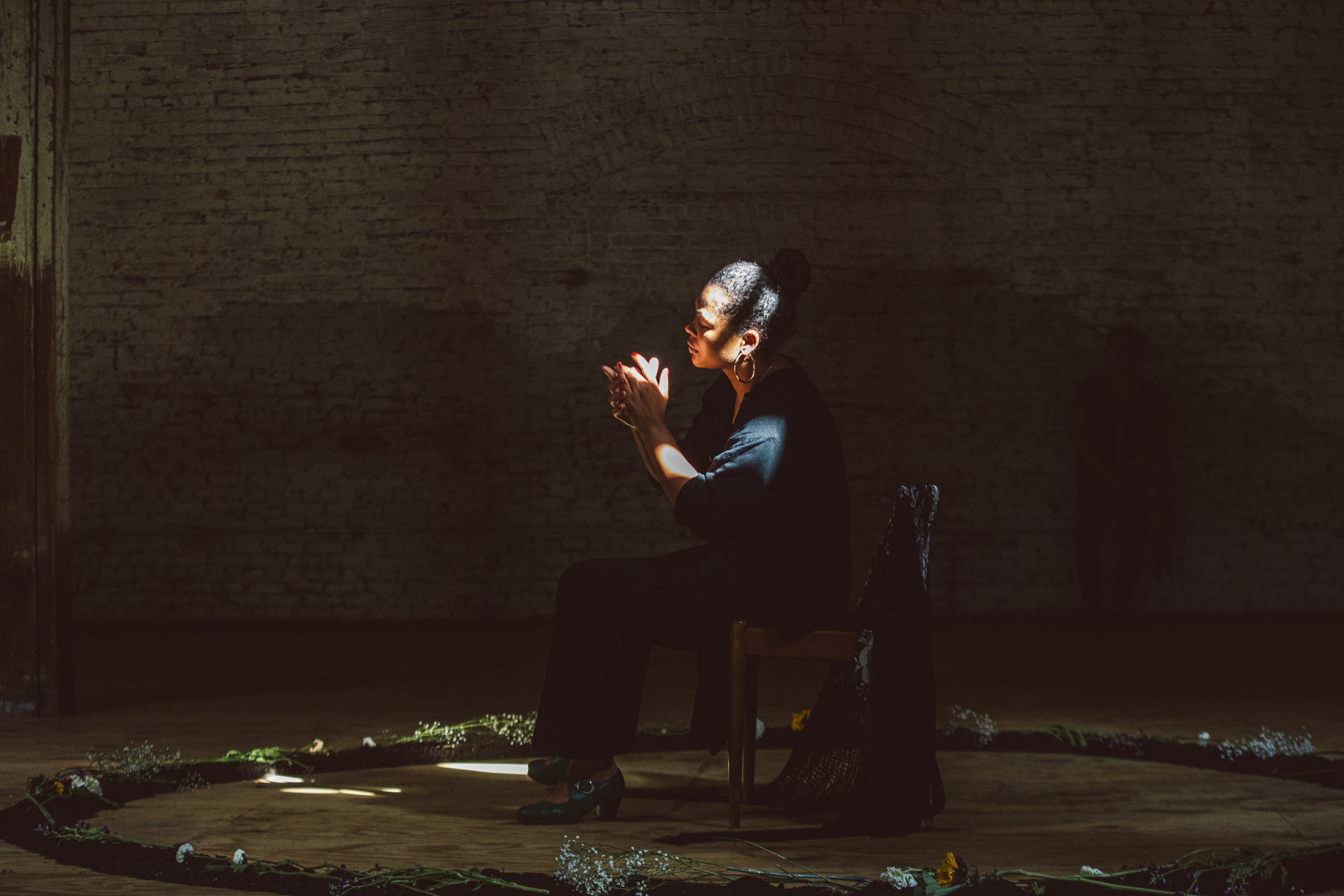
How is intersectionality understood in a Danish context? How can we translate words and concepts from a race-conscious context like the United States to a race-evasive context like Denmark? And what do artists' needs, institutions, and intersectionality have to do with each other?

Date
17.3.26
17.3.26
time
15:00 - 17:00
Place
The Stage, Thoravej 29, 2400 København NV.

For artists and industry professionals. 30 participants.

Sign up via Billetto.

Language: Danish. Accessibility: Ground floor with ramp.
Please send an email to phyllis@hautscene.dk if you have specific accessibility needs.

Book ticket

This session is about stopping and taking a moment to both define and contextualize key concepts that are often used across creative and social industries. Many of us want positive change, but are we even sure that we understand what each other means?

Intersectionality is a concept developed by Black feminists that we adapt to our context from the US-American context. With a feminist starting point, we make space for multiple perspectives and artistic expressions that lie outside the norm across both society and the Danish performing arts scene. When we express the importance of an intersectional approach, it means that we acknowledge the ways in which different forms of oppression operate simultaneously – ways in which artists experience interlocking inequalities. We work from the notions that if we take good care of the most vulnerable among us, everyone benefits. Therefore, we take as our starting point a Black feminist ethic of care and cite, for example, Patricia Hill Collins, Audre Lorde, Kimberly Crenshaw, the Combahee River Collective, and others.

In a short presentation, key concepts are contextualized in a Danish context, after which participants are invited to critical reflection through collaborative exercises. Finally, we do a simple somatic exercise to feel where these topics land for each of us.
COLLECTIVE PRACTICE – ARTIST CARE is a newly developed knowledge framework that takes its point of departure in our context here and now, recognizing a lack of a common language to articulate lived experiences of inequality in Denmark – in Danish.

The prioritization of care emerges from HAUT's recognition that the artist's life is often precarious. This means that the artistic process coexists with and is influenced by the artists' material circumstances in everyday life. At HAUT, we attempt to facilitate the best possible conditions for artists and artistic development. As part of this concerted effort to develop intersectional* care and knowledge-sharing for performing artists, we have hired the duo Elizabeth Löwe Hunter og Phyllis Akinyi to lead our artist care work.

In addition to the material frameworks and resources we provide, we strive to be present with an attention to how structural inequalities shape the artists we invite to residencies.

COLLECTIVE PRACTICE – ARTIST CARE aims to help us – artists and institutions alike – develop a shared vocabulary and a conceptual framework to better identify our challenges. The idea is that we must be able to name our needs in order to be able to address and accommodate them, and at HAUT we believe that it is necessary to recognize differences in order to work towards social justice.

COLLECTIVE PRACTICE – ARTIST CARE thus draws on Hunter and Akinyi's long-standing care practices, and offers presentations, conversations and somatic exercises.

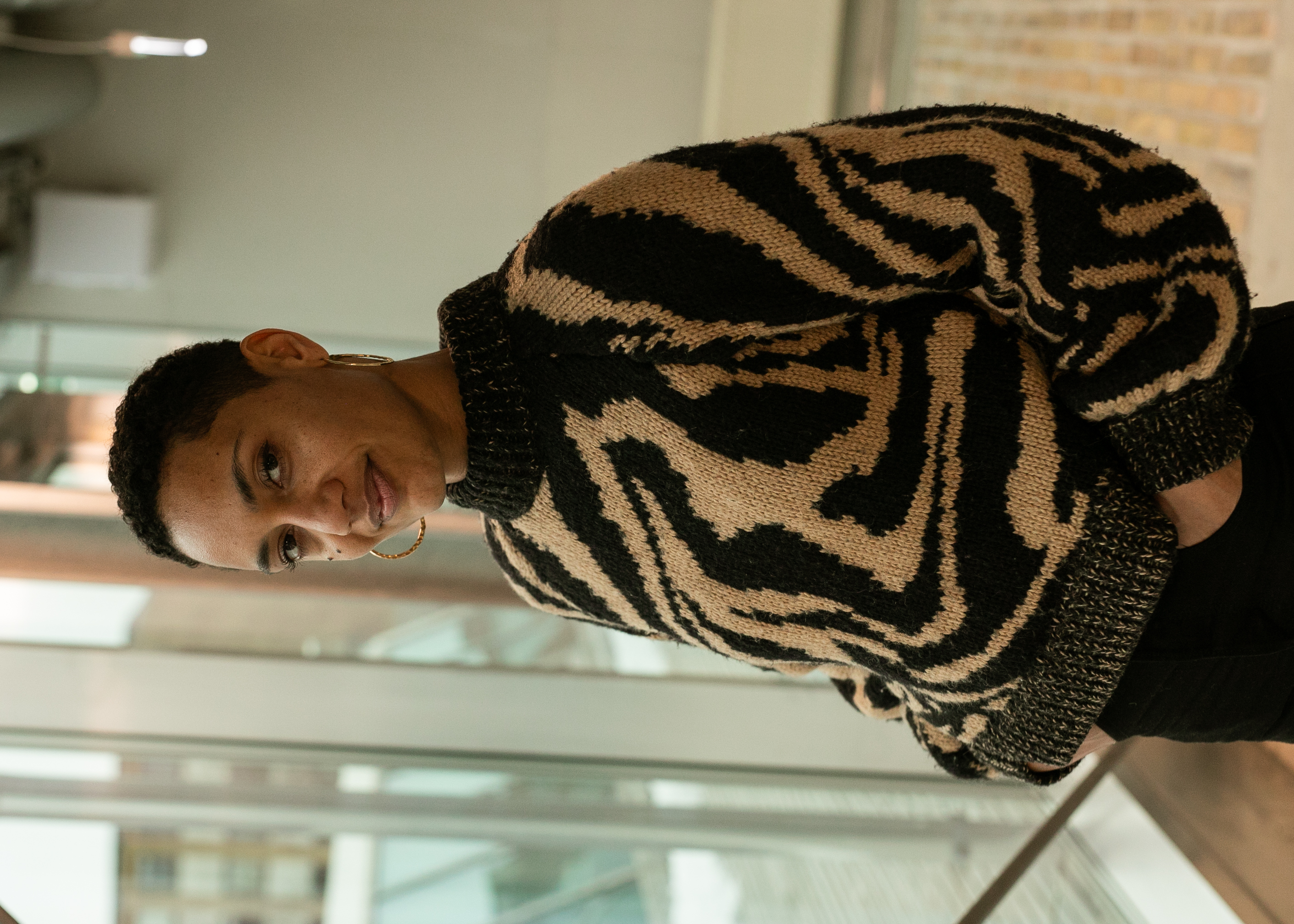
Elizabeth Löwe Hunter

Elizabeth Löwe Hunter, PhD, er uafhængig forsker, formidler og kulturanalytiker og undersøger racialisering, tilhørsforhold, og repræsentation i Danmark gennem feministiske, dekoloniale forskningsmetoder.

Hun har undervist i normkritiske forskningsmetoder på UC Berkeley og rådgiver organisationer i intersektionelle tilgange til dataanalyse, formidling og klientrelationer blandt andet i uddannelses- og kunstsektoren. Elizabeth har en PhD i Black Studies og Gender Studies fra University of California Berkeley og er specialiseret i at forstå racegørelse i en dansk og europæisk kontekst.

Hun vil desuden varetage formidlingsopgaver gennem en intersektionel tilgang

Website
Phyllis Akinyi

Phyllis Akinyi (she/they) is a Danish-Kenyan dancer, choreographer, and interdisciplinary performance artist based between Madrid and Copenhagen. Working at the intersection of flamenco, Africanist spirituality, and contemporary performance, their practice explores cultural hybridity, ancestral memory, and embodied resistance. Akinyi’s concept of Spatial Listening frames her durational and site-specific works, where sound, trance, and ritual create portals for diasporic presence. She is the founder and artistic director of Diasporic Dimensions and co-editor of Afro-Nordic Perspectives on Performance. Their work has been presented across Europe and the U.S., including at the Venice Biennale, Haus der Kulturen der Welt, Yellow Fish Festival, and The Danish Royal Theatre.

Website

Concept

Phyllis Akinyi (she/them) is a choreographer, performing artist, and researcher in flamenco, through a practice grounded in rhythm, storytelling, and vessel work that centers care, bodily experience, and resistance strategies.

Elizabeth Löwe Hunter (she/her) is an independent researcher, communicator, and cultural analyst who examines racialization, belonging, and representations in Denmark, specifically through a Black feminist ethics of care.

Theorists

We credit US-American theorists such as Patricia Hill Collins for the concept of a Black feminist ethics of care and Audre Lorde for concepts of self-care. We acknowledge Sojourner Truth, Ida B. Wells, the Combahee River Collective, Angela Davis, bell hooks, all of the above, and many, many more for having analyzed intersectionality long before the term was conceptualized by Kimberly Crenshaw in 1989. Particularly important, we credit Ylva Habel, Lena Sawyer, Philomena Essed, Gloria Wekker, Fatima El-Tayeb, and Françoise Vergès, among others, for anchoring intersectional approaches in our European context.